

Table of Contents
- What Makes a Coffee Spice Rub Work for Smoking
- Essential Ingredients in the Best Coffee Spice Rub
- Best Coffee Rub for Brisket and Other Smoked Meats
- How to Make Homemade Coffee Rub
- Coffee Rub Smoking Temperature Guide
- Common Mistakes to Avoid with Coffee Rubs
- Frequently Asked Questions
Last Updated: September 29, 2026
What Makes a Coffee Spice Rub Work for Smoking
A coffee spice rub works for smoking because coarse coffee grounds build a dark, flavorful crust while their oils melt into the meat during long, low cooks. The best coffee spice rub for smoking balances three things: bitterness from the coffee, sweetness from sugar, and heat from dried chiles. Get that balance right and you get deep color, real bark, and a flavor that plain salt-and-pepper rubs can't touch.
The Role of Dark Roast and Coarse Grind
Dark roast and coarse grind are the two decisions that make or break a coffee rub. Dark roast beans carry deeper caramelized sugars and less acidity, which reads as richer and less sour on smoked meat. Coarse grind keeps the coffee from dissolving into a paste and lets it sit on the surface as texture.
Essential Ingredients in the Best Coffee Spice Rub
The essential ingredients in the best coffee spice rub are coffee, a sweetener, salt, and a heat source. Everything else is tuning. A reliable base ratio is 2 parts coarse coffee, 2 parts brown sugar, 1 part kosher salt, and 1 part combined spices. From there you adjust to taste.
- Brown sugar caramelizes at roughly 320°F and feeds bark formation, helping the crust set and darken.
- Kosher salt seasons the meat and pulls moisture to the surface, which dissolves the rub and helps it adhere.
- Granulated garlic and black pepper form the savory backbone and survive long cooks without scorching.
- Paprika adds color and mild sweetness, while chili powder, cayenne pepper, and ancho chili bring layered heat.
- Cumin and coriander add earthy, warm notes that play well with coffee's roasted character.
Building Flavor: From Brown Sugar to Ancho Chili
Think of the blend in layers. Sweetness sits on top, salt penetrates, and chiles and coffee build the finish. Ancho chili is the quiet hero here: it's mild, fruity, and slightly raisin-like, which mirrors coffee's own dried-fruit notes.
- Sweet layer: brown sugar, maple, or a touch of molasses
- Savory layer: kosher salt, granulated garlic, black pepper
- Earthy layer: cumin, coriander, paprika
- Heat layer: ancho chili, chili powder, cayenne
- Aromatic layer: coarse dark-roast coffee
The Roast-to-Spice Pairing Matrix
Most guides tell you to "use coffee" without saying which coffee. That's the gap. Roast level changes the bean's acidity, sugar development, and aromatic oils, and those changes dictate which spices flatter it. Here's a working matrix:
| Coffee Roast | Flavor Character | Spices That Pair Best |
|---|---|---|
| Light roast | Bright, fruity, higher acidity | Coriander, cardamom, citrus zest, white pepper |
| Medium roast | Balanced, nutty, mild caramel | Cumin, paprika, garlic, brown sugar |
| Dark roast | Deep, smoky, low acidity, bittersweet | Ancho chili, black pepper, molasses, cocoa |
| Espresso roast | Intense, oily, heavy body | Cayenne, smoked paprika, dark brown sugar |
Grind Size: The Variable Nobody Talks About
Grind size determines both crust texture and how fast the coffee's oils release during a long smoke.
- Coarse grind (kosher-salt texture): toasts gradually, builds bark, releases oils slowly over hours. Best for brisket, pork shoulder, and any cook longer than three hours.
- Medium grind (cornmeal texture): a middle ground for tri-tip, chicken, and ribs where you want some crust but a faster set.
- Fine grind (flour texture): clumps, scorches, and turns acrid within the first hour. Avoid it for smoking entirely, though it works in a quick-seared steak rub where contact time is short.
Caffeinated or Decaf?
A question that comes up constantly: does caffeine matter? It doesn't survive the cook in any meaningful way. Caffeine is water-soluble and largely breaks down under sustained heat, so the flavor you taste comes from the roasted bean, not the stimulant. That means decaf works just as well for flavor, which is useful if you're cooking for guests who avoid caffeine or if you simply want to use up a bag of decaf that's gone stale for drinking.
Best Coffee Rub for Brisket and Other Smoked Meats
The best coffee rub for brisket leans heavier on black pepper and coarse coffee than a rub built for poultry or fish. Brisket is a big, fatty cut that can carry bold seasoning, so a 50/50 coffee-and-pepper base with brown sugar and ancho works beautifully. Lighter proteins need a gentler hand.
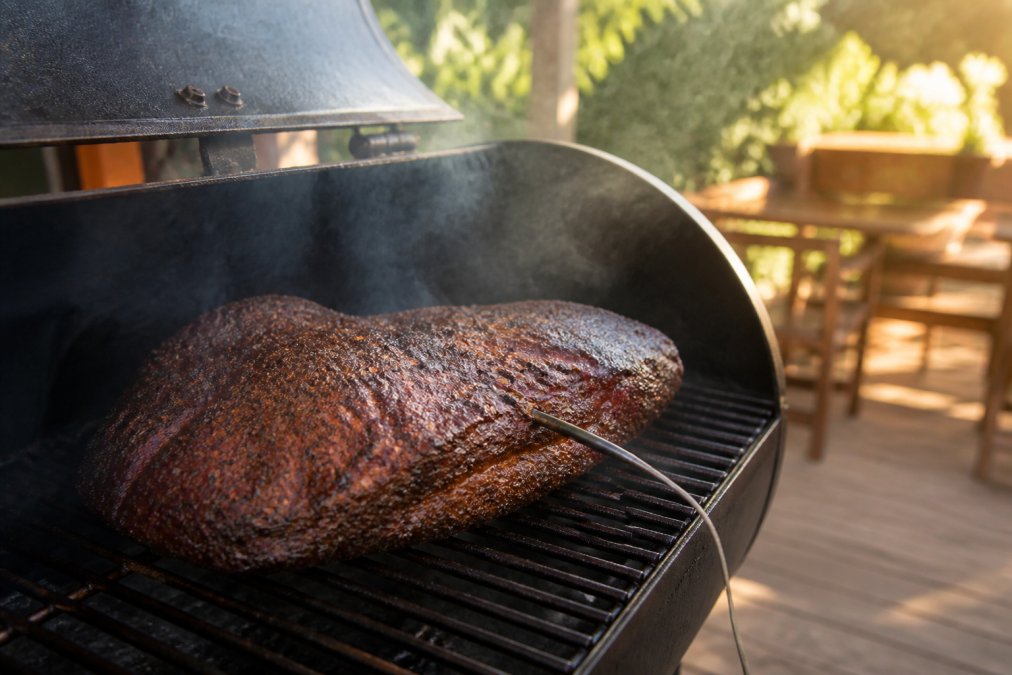
Here's how coffee rubs pair across proteins:
| Protein | Rub Style | Key Notes |
|---|---|---|
| Brisket | Coffee + heavy pepper | Bold bark, long cook |
| Tri-tip | Coffee + garlic + ancho | Faster cook, slices clean |
| Pork shoulder | Coffee + brown sugar | Sweet-savory pulled pork |
| Chicken | Coffee + paprika | Lighter, shorter smoke |
| Fish | Coffee + citrus zest | Delicate, quick cook |
| Wild game | Coffee + juniper | Cuts gaminess |
How to Make Homemade Coffee Rub
Making a homemade coffee rub takes about five minutes and one bowl. Combine your dry ingredients, whisk them until evenly mixed, and store the blend in an airtight jar. The key is even distribution so every pinch carries the same flavor.
Here's the step-by-step:
- Measure 2 tablespoons coarse dark-roast coffee
- Add 2 tablespoons brown sugar and 1 tablespoon kosher salt
- Whisk in 1 tablespoon black pepper and 1 tablespoon granulated garlic
- Add 1 tablespoon paprika, 1 teaspoon ancho chili, and 1 teaspoon cumin
- Add 1/4 teaspoon cayenne for gentle heat
- Whisk until no clumps remain
- Store in an airtight jar away from heat and light
Total time: 5 minutes. Difficulty: Beginner.
Coffee Rub Smoking Temperature Guide
The coffee rub smoking temperature guide starts with one rule: cook low and slow between 225°F and 275°F. That range lets the coffee toast gradually instead of burning. Above 300°F, the sugars in the rub scorch before the meat is anywhere near done.
Temperature by Cut
| Protein | Smoker Temp | Pull At (Internal) | Why |
|---|---|---|---|
| Brisket | 225°F-250°F | 200°F-205°F | Long cook, collagen breakdown, bark development |
| Pork shoulder | 225°F-250°F | 195°F-205°F | Same low-and-slow logic, forgiving cut |
| Tri-tip | 225°F then sear | 130°F for medium-rare | Short cook, crust set then finished hot |
| Chicken | 250°F-275°F | 165°F | Poultry needs higher temp for skin and safety |
| Fish | 225°F | Flakes easily, under 145°F | Delicate, short window before coffee turns bitter |
The USDA guidance on safe minimum cooking temperatures is the baseline for doneness, and it's worth bookmarking before your next cook.
The Two-Zone Setup
A grill master watches two temperatures at once: the smoker and the meat. The rub is only doing its job while the surface stays in that sweet spot. Set up a two-zone fire, coals or wood on one side, meat on the other, so you can move the protein away from direct heat if the surface starts to darken too fast.
When to Wrap
Once the bark is set and the coffee has done its work, usually somewhere between 160°F and 170°F internal on a brisket, wrapping in butcher paper or foil stops further bark development. That's fine, because the coffee flavor is already locked in. Wrapping earlier traps moisture against the rub and steams the crust soft, which defeats the point of using coffee in the first place.
Low and slow builds bark. Hot and fast builds crust. Match your temperature to the cut, not to habit, and remember that coffee's oils are the first thing you lose when the heat climbs.
Common Mistakes to Avoid with Coffee Rubs
The most common mistakes with coffee rubs are using too fine a grind, applying too early, and overloading the heat. Each one turns a good blend into a disappointing one.
- Fine grind: burns and turns acrid. Use coarse.
- Too much rub: more isn't better. A thin, even coat beats a thick pile.
- Sugar too early: draws moisture and prevents bark.
- Too much cayenne: buries the coffee's aroma.
- Stale coffee: old grounds taste flat. Freshness matters.
Frequently Asked Questions
What is coffee spice rub and how does it work?
A coffee spice rub is a dry seasoning blend that uses ground coffee as a base, combined with spices like paprika, brown sugar, and chili powder. When applied to meat and smoked low and slow, the coffee grounds help form a dark, flavorful bark through caramelization and crust development. The coarse grind prevents bitterness while adding aromatic depth. For best results, use a dark roast coffee and balance it with sweetness and salt to enhance the overall flavor profile of smoked brisket, tri-tip, or pork.
Does coffee really tenderize meat?
Coffee contains natural acids and enzymes that can mildly break down muscle fibers, contributing to meat tenderization over long smoking sessions. However, the effect is subtle compared to traditional acidic marinades. The primary benefit of a coffee spice rub is flavor: it adds a smoky, earthy note and helps create a rich bark. For noticeable tenderness, rely on low and slow cooking to the correct internal temperature, such as 195-205°F for brisket, rather than the rub alone.
What meats pair best with coffee-based spice rubs?
Coffee-based spice rubs shine on beef, especially brisket, tri-tip, and steak, where the dark roast complements the meat's natural richness. They also work well on pork ribs, pork shoulder, and wild game like venison. For poultry, try it on smoked chicken thighs or duck. Fish like salmon can handle a lighter application. The key is balancing the rub's bitterness with sweetness from brown sugar and using a coarse grind to avoid overpowering the meat's flavor.
How do you apply coffee rub for the best bark when smoking?
Pat the meat dry, then apply a thin layer of binder like mustard or oil to help the rub adhere. Sprinkle the coffee spice rub generously, covering all sides, and let it rest for 15-30 minutes before smoking. For optimal bark formation, smoke at 225-250°F and avoid wrapping until the bark sets, usually after 4-6 hours. Spritz occasionally with apple juice or water to keep the surface moist, which aids crust development and prevents the rub from burning.